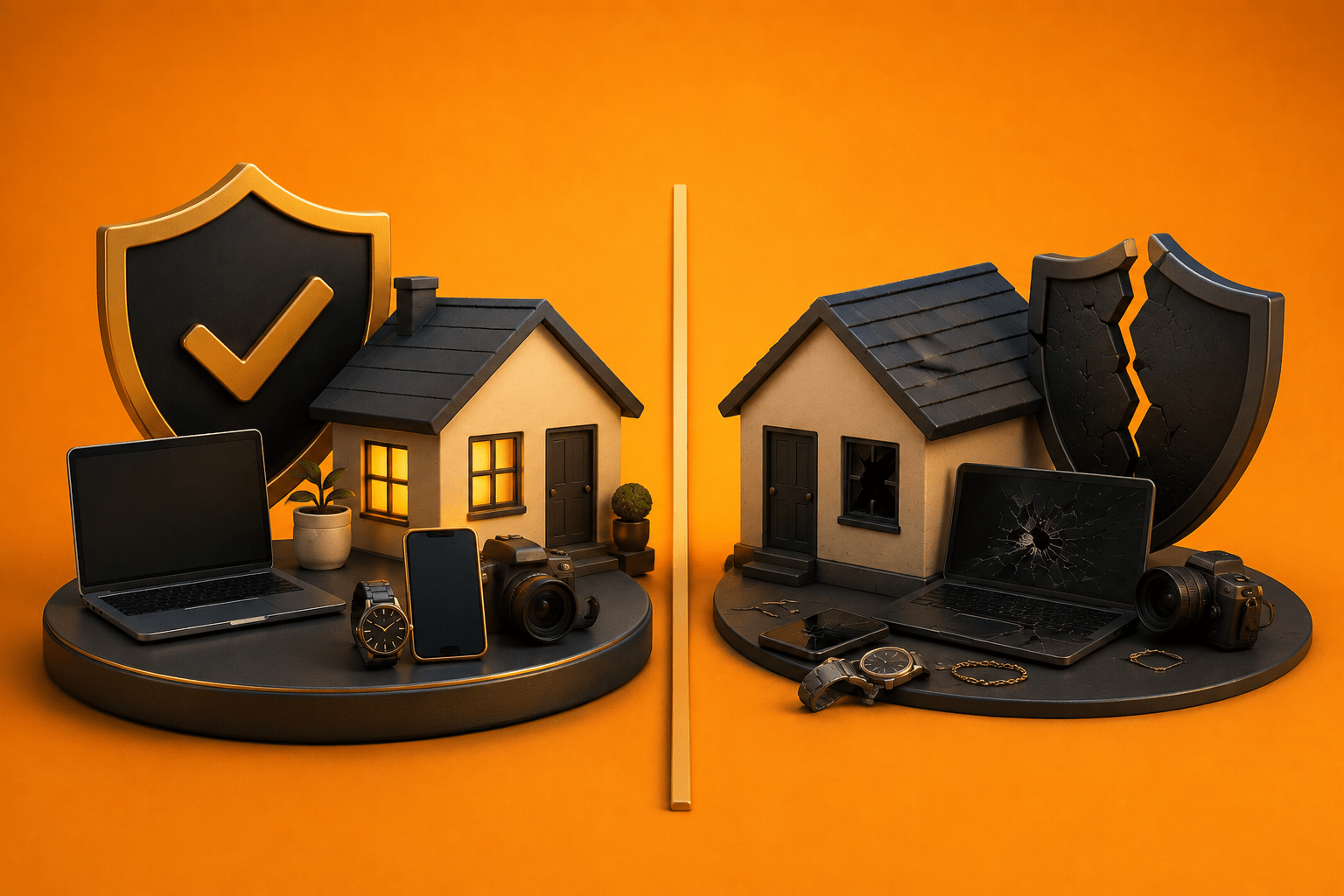
Contents insurance is usually the first thing dropped from a household budget and the policy that causes the most arguments at claim stage. That is because “contents” means something different in every insurer’s small print.
Standard contents policies almost always cap the amount paid for a single item unless it is separately listed as a specified item. The cap is commonly £1,500 to £2,500, depending on the insurer. A stolen laptop and a stolen engagement ring can both fall foul of this without anyone realising until the claim is assessed at that level. Accidental damage is not automatically included on most standard policies and is one of the most common reasons a claim is rejected—not because the claim was fraudulent, but because the damage was never covered in the first place. Renters are also statistically less likely to hold contents insurance than homeowners, despite having no safety net if a fire or flood destroys their belongings.
| Cover feature | Standard contents | Contents with accidental damage | High-value specified items |
|---|---|---|---|
| Theft and fire | Yes | Yes | Yes |
| Accidental damage | No | Yes | Depends on policy |
| Single item limit | Applies (typically £1,500 to £2,500) | Applies | Removed for listed items |
| New for old replacement | Usually, check policy wording | Usually | Usually |
| Best suited to | Modest contents, tight budget | Households with children or pets | Anyone with jewellery, tech, instruments or collectables above the standard limit |
Run the numbers, then talk to us. Our financial calculators cover mortgage repayments, how much you could borrow, stamp duty, bridging finance and rental yield. Results are estimates only and should not be relied on as financial advice.
Most people significantly underestimate the total value of their contents. Here are four situations where that gap becomes a real financial problem.
Standard contents policies typically cap the payout for any single item at £1,500 to £2,500 unless that item is separately listed and its full value declared at inception. A camera worth £2,800 that is stolen may be reimbursed only up to the single-item limit, minus the excess. If it is damaged accidentally and accidental damage is not included on your policy, it may not be covered at all. The gap comes from not reading the policy before you need it.
The building belongs to the landlord. Everything inside it that you own belongs to you. A landlord’s buildings policy does not cover a tenant’s possessions. If a burst pipe from the flat above destroys your furniture, clothes, electronics, and work equipment, the landlord’s insurer responds to the structural damage. Your belongings are not their problem. A tenant contents policy covering £20,000 of possessions typically costs under £15 a month.
Accidental damage is an optional extra that can sometimes drop off at renewal without being clearly flagged. If you spill coffee on a laptop, knock a television off its wall bracket, or put your foot through the ceiling from the loft, whether that is covered depends entirely on whether accidental damage is still active in the current policy year. Checking takes about 90 seconds. Not checking can leave you facing a substantial repair or replacement bill when you discover the damage was never covered.
Engagement rings, watches, and high-value jewellery are among the contents items most likely to be subject to a single-item limit rather than covered for their full value. A ring worth £6,000 may be covered only up to a £1,500 single-item limit unless it has been declared, valued, and listed separately. Many people assume that because it is the most valuable thing they own, it is automatically the best protected. The single-item limit often means the opposite.
Speak to an adviser to discuss your circumstances and explore how bridging finance could work for you.
A tenant’s flat is burgled. A laptop, a camera with two lenses, and a bicycle are taken, worth around £4,200 at replacement cost. No contents insurance was in place. The reasoning was that it is a rented flat and there was not much in there worth insuring. The full replacement cost comes out of the savings that had been building towards a house deposit. The deposit target moves backward by five months.
Same burglary. Same items. Same flat. A tenant contents policy had been in place for two years at £14.50 a month. The camera equipment was listed as a specified item when it was purchased because it exceeded the standard single-item limit of £2,000. All three items are replaced in full, minus a £100 excess. Total out-of-pocket cost: £100. Total cost of not having the policy: £4,200. The deposit savings stay on track.
Clear,honest answers to the questions we hear most from clients and introducers.
A landlord’s buildings policy covers the structure and the landlord’s own fixtures and fittings. Your possessions—furniture, electronics, clothes, and work equipment—are not covered under any circumstances by the landlord’s insurer. If a burst pipe, fire, or theft destroys everything you own, the landlord’s policy responds to the structural damage. Your belongings are not their problem. A tenant contents policy covering £20,000 of possessions typically costs under £15 a month.
Standard contents policies cap the amount paid on any single item, typically between £1,500 and £2,500. A camera, engagement ring, watch, musical instrument, or laptop worth more than that cap may be reimbursed only up to the limit if it is not separately listed. Listing each high-value item by name with its current replacement value removes the single-item cap and may cost nothing beyond any applicable premium adjustment.
Accidental damage on contents insurance covers things like spilling coffee on a laptop, knocking a television off a wall bracket, or dropping a valuable item. It is not included on most standard contents policies and must usually be added as an optional extra. It is also a common reason for a contents claim to be rejected—not because of fraud, but because the cover was simply never in place. Checking whether it is active on your current policy takes a few minutes.
Contents insurance does not become less important when money is tight. It becomes more important, because
replacing everything is harder to absorb from savings than it was before. A standard contents policy covering
£20,000 to £30,000 of belongings typically runs to around £10 to £20 a month. That is significantly less than
replacing a laptop, a phone and a few other items out of pocket.
We search the market and handle the process so you can focus on moving.
Whole of market search across a wide panel of lenders
Dedicated adviser throughout the process
We handle the paperwork and liaise with lenders on your behalf